Mulberry Silk vs Satin vs Bamboo: Why a Mulberry Silk Bonnet Is the Only True Hair Protector
The truth about “silk” in haircare
Search terms like:
- best silk bonnet for hair
- silk vs satin bonnet
- is bamboo silk good for hair
…are exploding right now.
But here’s the problem:
Most products labeled “silk” aren’t actually silk.
And if your goal is:
- reduce frizz overnight
- prevent hair breakage
- wake up with smoother hair
👉 the material matters more than anything else.
What makes mulberry silk different (and why it ranks #1 for hair protection)
Mulberry silk is a natural protein fiber made from silkworms fed exclusively on mulberry leaves. Like linen, cashmere, cotton, and wool, mulberry silk is one of a few pure fibers used to make clothing. It has been used for millennia and regarded as a true luxury material.
Unlike alternatives, it has:
- long, continuous fibers
- ultra-smooth surface
- natural moisture balance
Why this matters: benefits of mulberry silk for hair)
✔ reduces friction while sleeping
✔ prevents breakage and split ends
✔ helps retain moisture in hair
✔ keeps hair smooth and shiny overnight
This is why mulberry silk consistently ranks as:
👉 the best fabric for protecting hair while sleeping
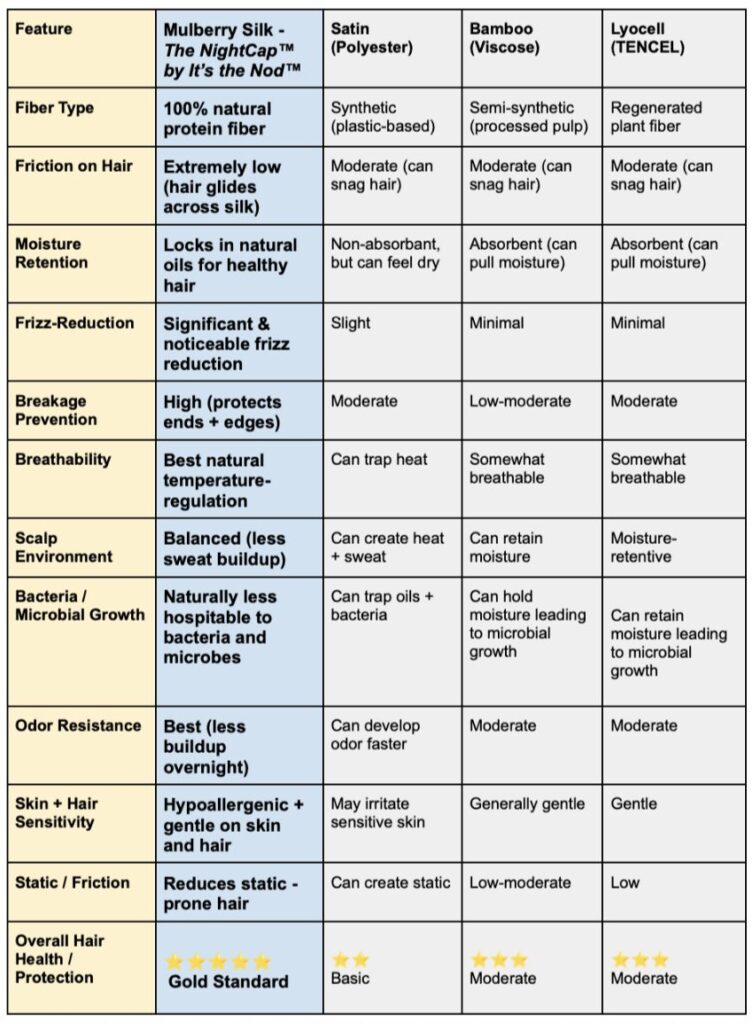
Silk vs Satin vs Bamboo: The real comparison
Mulberry Silk:
• 100% natural protein fiber
• ultra-smooth (lowest friction)
• retains moisture
• breathable + temperature regulating
• best for long-term hair health
👉 Best choice for: hair protection, frizz reduction, breakage prevention
Satin (Polyester):
• synthetic (plastic-based)
• smoother than cotton but not truly friction-free
• traps heat
• can create static
👉 Better than cotton, but not optimal
Bamboo / Eucalyptus (Viscose, Lyocell):
• heavily processed plant fibers
• semi-synthetic
• shorter fiber structure
• more absorbent than silk
👉 Feels soft, but does not protect hair the same way
The hidden difference: fiber structure
Mulberry Silk:
• long, uniform fibers
• naturally smooth at a microscopic level
Alternatives:
• broken down + reprocessed
• shorter, inconsistent fibers
👉 Result:
Your hair experiences:
• less friction with silk
• more friction (even subtly) with alternatives
Over time, when using bonnets that are not pure mulberry silk, that difference shows up as:
• frizz
• breakage
• dryness
What actually happens to your hair overnight
While you sleep (6–8 hours):
On cotton or synthetic fabrics:
✖ friction roughs up the cuticle
✖ moisture is pulled out
✖ hair tangles and weakens
On mulberry silk:
✔ hair glides
✔ moisture stays in
✔ cuticle remains smooth
Why this shows up in real life
When you choose a true mulberry silk hair bonnet,
- you wake up with less frizz
- your ends feel softer
- your style lasts longer
- you need less heat styling
👉 This is why people search:
“how to keep hair smooth overnight”
And the answer is almost always:
👉 protect it while you sleep
Why a silk bonnet works better than a pillowcase
A pillowcase helps—but it’s passive.
A mulberry silk bonnet:
- protects all your hair
- moves with you
- prevents friction from every angle
👉 Full protection vs partial protection
The cost comparison (and why cheap isn’t actually cheaper)
Let’s be honest—this matters.
Synthetic satin bonnet:
- $8–$20
- wears out faster
- less protection
Bamboo / eucalyptus:
- $20–$40
- marketed as “clean,” but less effective
Mulberry silk bonnet:
- premium ($60–$120+ depending on momme + design)
- long-lasting
- actually protects your hair
👉 When you factor in:
- less breakage
- fewer trims
- less product waste
mulberry silk becomes the better investment
Why we chose mulberry silk for It’s The Nod
At It’s The Nod, we made a very specific decision:
No satin. No blends. No substitutes.
Only mulberry silk.
Because:
- it performs best
- it protects best
- it aligns with what actually works for smoother, healthier hair over time
We’re not interested in trends.
We’re interested in:
👉 results you can see and feel for better hair days and sweeter nights
✨It’s more than a NightCap. It’s the Nod.™
🤍Explore the collection at itsthenod.com. Your hair deserves it.